Ireland’s Gambling Advertising Watershed: (Full Breakdown)
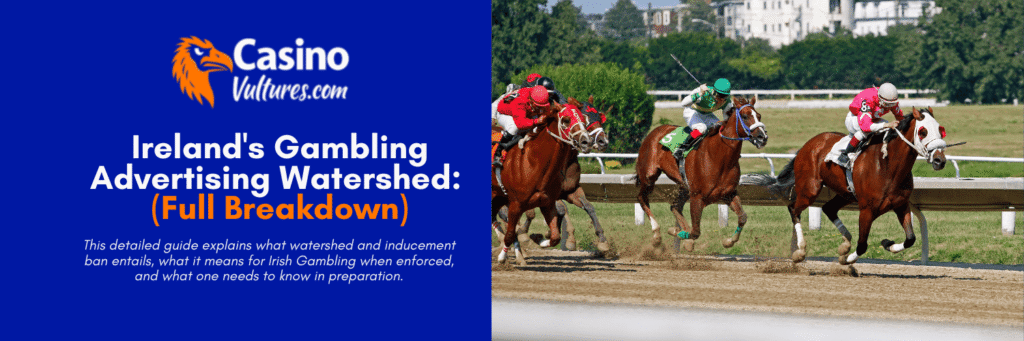
If you’ve been keenly following Irish gambling news lately, you probably have come across, The Gambling Regulation Act 2024; the advertising watershed and the official ban on inducements. Essentially, these are rules that will prevent gambling content and ads from popping up on your television before 9pm. So the whole space of personalized free bets, VIP offers, targeted bonus promotions from operators are gradually coming to an end.
However, the daytime gambling advertising ban and the piece of legislation on ban of inducements that come with bookmarkers is yet to begin as of the writing of this article. They are part of the Gambling Regulation Act 2024, and will eventually be enforced. The timing of this remains at the discretion of the Department of Justice.
This detailed guide explains what watershed and inducement ban entails, what it means for Irish gambling when enforced, and what one needs to know in preparation.
The Advertising Watershed: What it is and What it entails
When the Gambling Act is fully enforced, it will boycott the broadcast of gambling ads on television and radio between the hours of 5:30am and 9:00pm.
Realistically, it means no gambling ads on Irish TV or radio during breakfast, school run, lunchtime news, Saturday morning sport, or even early evenings, only until 9pm.
In full context, this covers literally every big live sporting event that’s broadcasted in Ireland in daytime hours. Some of which includes GAA matches, rugby internationals, Premier League football, horse racing; and all of these will be affected.
The Act itself offers for a watershed that bans the airing of gambling advertising on television and radio between 5:30am and 9:00pm. Additionally, the Act comes with the privilege to permit the Authority to prescribe the times, place and events where gambling advertising can be aired, showcased or published. The Authority also spells out the frequency which advertising can be broadcasted, the duration of ads, and the volume of ads that can be displayed.
This gives the GRA some substantial power to model the advertising space beyond the basic watershed itself. When the provisions begin, the GRAI still have the authority to; limit the no. of gambling ads per hour, the specific duration of individual spots, and the types of events where gambling ads can pop up.
What about Ads on Social Media and Online?
The watershed is particularly applied to television and radio broadcasting. For digital and social media, the rules work distinctively. Gambling ads can only be presented to individuals who both hold an account with the gambling operator and also actively follow the operator’s social media account.
This is a quite a reasonable restriction. It therefore means a gambling operator isn’t able to run social media ads looking to target a broad audience; its only people who specifically have both an account with that operator and those who also actively follow them on that specific platform.
The olden days of gambling ads popping up in feeds of people who only follow popular Irish sports accounts or influencers are coming to an end.
The GRAI will have the authority to apply to the High Court to ban advertising that contradicts the GRAI and some violations will come with criminal penalties.
The One Limit the GRAI Cannot Control: Overseas Broadcasts
There is one huge gap in the watershed that is worth understanding. The GRAI has no power over sponsorship and ads that emerge “in event” being showcased in other countries.
This in an instance means that when you’re watching a Premier League match on Irish television, the pitch side hoarding ads, usually from betting companies that can be seen during a broadcast falls outside GRAI jurisdiction. Those hoardings are specifically in England, not Ireland, and Irish law doesn’t affect them.
It is presumed that plenty of factors will be dependent on the guidance notes issued by the GRAI. Incidental advertising such as hoardings or sponsorship at tracks are not expected to be affected, although guidance is awaited to be confirmed.
Children and Gambling Advertising
The child-focused parts of the ads rules happen to be among the most powerful provisions in the entire Act. They indicate the public health concern that drove a big chunk of this legislation; research by the Economic and Social Research Institute (ESRI) in 2023 was portrayed as a watershed moment, depicting that problem gambling was much more prevalent than previously reported, and discovering that one in 30 adults had a problem; 10 times way higher than assessed in a previous study in 2019.
The GRA outlaws selling and providing clothing and merchandise that advertises any form of gambling activity or the name, logo, or trademark of a licensee where the attire or merchandise is aimed to be worn or used by a child. Distributing such products at events that are usually attended by children is also prohibited. Not complying with these prohibitions will also be a criminal offence.
This therefore means that gambling-branded hats, scarves, flags, and merchandise are not to be distributed at events where children have attended.
Ireland’s main sports of GAA, soccer and rugby currently do not have any front-of-shirt sponsorships coming from gambling companies but the new ban is apparently bigger than a prohibition for sport organizations.
When enforced, section 159 of the GRA will not allow B2C or B2B licensees to sponsor, or make use of an agent to sponsor, events that are intended for children, where plenty of attendees or participants are children. This instantly affects youth sport; GAA underage competitions, soccer leagues for children, and other identical events can no longer be sponsored by gambling companies.
Is Online casino gambling illegal in IE?
The Inducement Ban: What It Means for Bonuses and Free Bets
This is the provision that will specifically affect regular Irish casino and sports betting players. It will be a violation for a licensee to provide a person or group, any form of incentive to encourage them to gamble or keep on gambling.
Examples of inducements currently provided by the gambling industry include the incentive of hospitality or VIP treatment, free bets, the return of losses as free bets, or even favorable bets and better odds to lure a person to gamble, to continue gambling or to discourage them from stopping gambling where they have indicated an objective to do so.
The includes a big list; free bets, VIP treatment, free credit, free hospitality, improved odds, loss rebates given as free bets. These are the usual tools that operators have implemented to attract and preserve players for years. Under the Act, they become violations when targeted at particular individuals or groups.
The Critical Nuance: Targeted vs General Offers
It get more detailed than most media coverage indicates. It is crucial to note that inducements, which commonly include improved each-way offerings, free bets, etc., are not restricted generally under the legislation on condition that they don’t apply to just a person or a particular group of persons. Inducements will be permitted but only if provided to the general public.

This is an important distinction. An operator offering a promotional price or a general free bet accessible to all registered users at the same time is not automatically forbidden. What is restricted is the targeted offer; the personalized emails to precise players with specialized wording.
The bill also forbids targeted inducements; those directed at individuals on the basis of gender, age, and ethnicity or at some supporters of a particular sports team. Targeting a promotion at “GAA fans” or even at “men over 25 who bet on football” is precisely captured by this provision.
The Minister, in consultation with The Authority, are able to make regulations to restrict the offer of promotions that directly or indirectly entice people to gamble. A person that violates any of these enactments will be guilty of an offence and liable, on conviction, to up to 5 years imprisonment or a fine as seen fit by the courts.
Magnús Már Quick Tip:

The inducement rules existing under the Gambling Regulation Act 2024 apply to GRAI-licensed operators. In the current transition period, with online casino gaming licenses still being rolled out, many casinos targeting Irish players are running under MGA or Gibraltar licenses as opposed to GRAI licenses. This therefore means welcome bonuses, free spins, and promo offers are still available at foreign-licensed casinos under the current regulatory frameworks. Before you go on to assume, that a bonus you intend to claim is restricted, check which license the operator currently holds.
The Opt-In Requirement
Adults being required to opt in to receive marketing communications is one of the subtle provisions of the advertising framework, but one that will be significantly felt in daily life by anyone who is currently receiving gambling marketing emails, texts, or push notifications.
Under the new rules, adults must precisely consent to getting marketing communications from gambling operators; this default position changes from opt-out (where you’d receive communications unless you unsubscribe) to opt-in (where you receive nothing unless you have particularly agreed).
This is a huge change. All Irish players who’ve been receiving daily bonus emails, loss-chasing free bet texts, and promo notifications they never asked for will substantially benefit from this provision.
Magnús Már Quick Tip:
When the opt-in requirement is enforced, you will spot consent requests from gambling operators you’ve signed up with. Be careful, before ticking the box. Opting out means a way cleaner inbox and very minimal nudges to deposit. You are free to opt in later in case you change your mind. Research has indicated that marketing communications from gambling operators may boost betting frequency among recipients. Opting out is a free and seamless responsible gambling tool.
The Influencer Advertising Rules
Social media influencers promoting gambling products is an escalating area of concern over all regulated markets and the Gambling Regulation Act 2024 tackles it directly. Gambling ads are only to be targeted at individuals who both hold an account with the gambling operator and who actively follow the operator’s social media on the same social media platform.
In practical terms, this means an influencer with a huge following isn’t able to promote a gambling operator to their full audience. They can only practice this in a context where the content only reaches people who both have an account with that operator and that follow the operator themselves on that social platform. And this is a very narrow audience that effectively eradicates the commercial motive for wide influencer gambling promotion.
UKGC vs MGA vs GRAI>>
What Has and Has Not Yet Come Into Force
This is the most crucial practical point for Irish players reading this as of the writing of this article. The daytime gambling ads prohibition, which initiated concern in the racing industry due to Racing TV frequently declaring it would render its Irish coverage economically unviable, and the legislation on ban on inducements offered by bookmakers are yet to commence. The timeline for the phasing in of the advertising ban remain at the sole discretion of the Department of Justice.
What this means for Irish players right now:
Already in effect: The GRAI is running and licensing operators. Most obligations in the Act have already began. The national self-exclusion register framework is still in development. The credit card gambling ban is to be applied at GRAI-licensed operators.
Not yet in effect: The 5:30am to 9pm ads watershed. (The inducement ban) The opt-in marketing needs. These provisions are present in the legislation but haven’t been implemented by ministerial order.
The racing industry’s concerns about the watershed, specifically pertaining to the commercial viability of racing broadcasts, have been among the factors in the deliberate pace of implementation. The GRAI mentions that it accepts these rules have a huge impact on operators and has been engaged in broader stakeholder consultations.
Magnús Már Quick Tip:
Ensure to keep an eye on announcements coming from the Department of Justice and the GRAI in regards to the commencement date for the ads and inducement provisions. When these rules are enforced, the change to your encounter as an Irish casino or sportsbook player will be recognizable; with fewer gambling ads, barely no targeted bonus emails unless you’ve opted in, and an immensely different promotional space at GRAI-licensed operators.
What the Racing and Sports Broadcasting Industry Thinks
It would be deceptive to write this article without recognizing the big industry concerns about the watershed. The racing sector specifically, has been vocal about the impact. Racing TV has plenty of times asserted that the watershed would cause its Irish coverage “economically unviable?”
Horse racing is deeply linked with the gambling industry in a manner that other sports aren’t. It exists commercially, with a bigger part of it being because of betting activity. Any rule that prohibits betting operators from advertising in daytime racing airing eliminates much of the commercial rationale for funding these broadcasts. The GRAI and the Department of Justice are taking a keen look at this tension as they work towards the commencement of the advertising provisions.
A watershed ban will apply to gambling advertisements between the hours of 5.30am and 9pm. However, certain exemptions are accessible, there has been widespread criticism from both operators and broadcasters on the watershed who claim that it could lead to making broadcasting horseracing in Ireland entirely unviable.
For Irish players this is worth taking note of; the practical implementation of the watershed may appear somewhat different from its face value in the legislation by the time it is 100% applied, with exemptions and GRAI guidance potentially creating certain categories of incidental sporting advertising.
Frequently Asked Questions
- What is Ireland’s gambling advertising watershed? When the Gambling Regulation Act 2024 officially begins, it will ban the airing of gambling ads on television and radio between the hours of 5:30am and 9:00pm. This hence means no gambling ads on Irish TV or radio in the majority of daytime and early evening hours.
- Has the advertising watershed come into force yet? No. As of the writing of this article, the advertising watershed and the inducement prohibition hasn’t commenced yet. They are published into the Gambling Regulation Act 2024 but need a separate ministerial commencement in order to take effect. The timing remains at the discretion of the Department of Justice.
- What is the inducement ban? It is a violation for a GRAI-licensed operator to provide a particular individual or group any form of incentive to gamble or to keep on gambling; including free bets, VIP treatment, free credit, loss rebates as free bets, and improved odds. General public offers available to all users at the same time are not automatically banned; the ban targets personalized, targeted promotions specifically.
- Will welcome bonuses disappear at Irish casinos? The inducement rules limit targeted welcome bonus promos. General offers that are available to all users simultaneously are treated dissimilarly. The full realistic impact on casino bonus structures is still in development as the industry continues to adjust to GRAI compliance requirements. During the transition period, casinos running under foreign licenses are not yet subjected to GRAI inducement rules.
- What are the new rules on gambling ads and children? Gambling-branded clothing and merchandise are not to be traded to or distributed among children. Gambling companies are not permitted to sponsor events or organizations where the majority of participants or attendees are children. Precisely targeting gambling advertising at children is forbidden and comes with criminal penalties.
- Can gambling companies still advertise on social media? Yes, but with substantial limitations. Gambling ads on social media can only reach users who both hold an account with the gambling operator and also particularly follow the operator on that specific platform. Wide audience targeting via social media is banned for GRAI-licensed operators.
- What is the opt-in marketing requirement? Under the Act, it’s a requirement for adults to consent to receiving marketing communications from gambling operators. The shifts from opt-out to opt-in, hence meaning you will only receive promo emails, texts, and notifications if you have precisely agreed to them. This provision is yet to commence as of the writing of this article.
- Where can I find more information about these rules? The GRAI’s official website at grai.ie releases guidance documents for operators and players. Citizens Information at citizensinformation.ie have a clear, simple guide to the gambling laws in Ireland. The Department of Justice website includes the legislative progress of the Gambling Regulation Act 2024.
Checkout New Online Casinos in Ireland>>
Last edited 7/8/2026
Editor In Chief:
Magnús Már
Magnús Már is the Editor in Chief of Casino Vultures. He has over eight years in the gambling industry. He has deep mastery in reviewing online casinos, dissecting bonus structures, and tracking regulatory developments across European and international markets.
Before Casino Vultures, he held senior editorial positions at several various Igaming publications, and built a reputation for honest, no-nonsense analysis that always put the player’s perspective first.
When he is not running Casino Vultures, Magnús follows football obsessively, has an unhealthy appreciation for well-made coffee, and is slowly working his way through every chess opening known to man.
References:
Measures of problems Gambling, Gambling behaviours Ireland
CitizensInformation: Gambling Regulatory Authority of Ireland
Act 35 (Gambling Regulation Act 2024)
This article is intended for informational purposes only and reflects the regulatory position as of July 2026. The advertising watershed and inducement ban provisions of the Gambling Regulation Act 2024 have not yet been commenced; always consult grai.ie and the Department of Justice for the current position on commencement. Casino Vultures is not a legal advice service. 18+ only. Please gamble responsibly. If gambling is affecting you, contact Problem Gambling Ireland at problemgambling.ie or Gamblers Anonymous Ireland at gamblersanonymous.ie.